
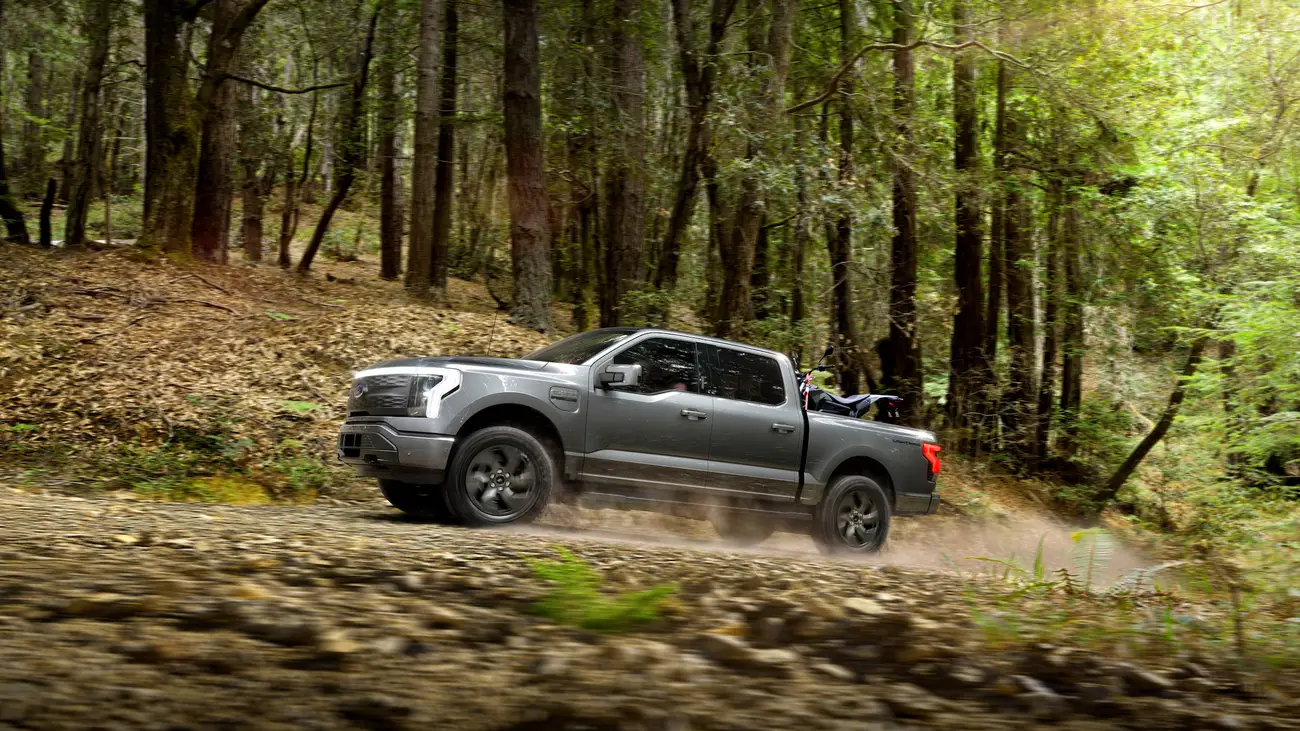
Ford F150 Lightning Price Cut Making Electric Trucks Finally Affordable
A lower sticker does not make a full-size electric pickup cheap overnight. The F150 Lightning Price Cut matters because it moves the conversation from fantasy garage talk to actual household math. For years, many American truck buyers liked the idea of an electric pickup, then backed away when the payment looked closer to a luxury SUV than a work rig. That gap hurt Ford because the F-150 name carries trust in places where EV sales pitches often fall flat.
This shift does not mean every contractor in Texas, every ranch owner in Montana, or every suburban dad in Ohio should run to a dealer by lunch. It means the numbers deserve a second look. When a Ford electric pickup drops closer to what buyers already expect from a high-trim gas truck, the decision changes. You stop asking, “Can I afford an EV?” and start asking, “Does this truck fit my life better than the gas one?” That is where the real story begins for electric truck affordability.
What the F150 Lightning Price Cut Changes for Real Truck Shoppers
Price is emotional before it is mathematical. A buyer may study payments, charging costs, resale values, and tax rules, but the first reaction still happens in the gut. For the F-150 Lightning, that gut reaction used to be rough. Many shoppers saw the badge, liked the torque, liked the frunk, liked the quiet cabin, then saw the price and walked back to a gas F-150.
Why the sticker finally speaks to households
The biggest change is not that the Lightning suddenly became a bargain. It did not. The change is that Ford is moving the truck closer to the range where normal buyers can compare it with familiar options. A family already considering a well-equipped gas F-150, a Ram 1500, or a Silverado may now pause long enough to run the numbers.
That pause matters. A $4,000 trim cut, a dealer discount, or a finance offer can shift a monthly payment by enough to keep a buyer at the desk. In the truck market, staying at the desk is half the battle. The buyer who leaves rarely comes back that week.
Here is the non-obvious part: the price drop may help Ford most with people who were not hunting for the cheapest truck. A buyer chasing the lowest payment will still look at used gas pickups, leftover inventory, or a lower trim half-ton. The Lightning’s best opening is with shoppers who already planned to spend real money on comfort, tech, and power. For them, electric truck affordability means “within reach,” not “cheap.”
Why a discount does not erase pickup math
A full-size truck carries costs beyond the window sticker. Insurance, tires, charging setup, registration, and financing all shape the final answer. The Lightning may skip oil changes, but it still rides on truck tires. It may cost less to fuel at home, but public fast charging can eat savings fast on road trips.
A homeowner in Phoenix with a garage, solar panels, and a daily 45-mile commute may see the truck in a favorable light. A renter in Boston who parks on the street may see a headache. Same truck. Different life.
That is why the smart buyer should treat the price cut as an invitation, not a verdict. It opens the door. It does not do the thinking for you. The best move is to compare the Lightning against your real week: school drop-offs, job sites, grocery runs, highway miles, towing days, and where you can charge without turning life into a puzzle.
The Real Affordability Test Is Not the Window Sticker
The sticker gets attention, but the monthly cost decides the purchase. Many truck buyers have learned this the hard way. A discount feels good on Saturday. The payment speaks louder on the 15th of every month. That is why the Lightning has to win as a total ownership choice, not only as a showroom headline.
Monthly payment pressure changes the EV conversation
The end of the federal clean vehicle credit for new EV purchases after September 30, 2025, changed the mood around electric trucks. For a while, many buyers thought of the credit as a built-in cushion. Once that cushion faded, automakers had to carry more of the burden through pricing, dealer offers, or financing.
That is where F-150 Lightning incentives become a serious part of the search. A buyer should not stop at MSRP. The real question is what the local dealer can do today, what Ford is offering this month, and whether the chosen trim has enough inventory pressure to create room.
This is also where timing gets strange. The best deal may not be on the trim you first wanted. A Flash or Lariat sitting on a lot may beat a lower trim on payment if the offer is better. That feels backward, but it happens often in truck buying. Inventory can matter as much as trim logic.
Home charging is where savings become real
The strongest case for a Lightning starts in the driveway. If you can charge at home overnight, the truck becomes easy to live with. You leave each morning with range already loaded, and the gas station fades from your routine.
The math can work well for Americans who drive steady local miles. A teacher in suburban Michigan, a pool service owner in Florida, or a small business owner in North Carolina may cover most driving inside a predictable loop. In that world, the Ford electric pickup starts to feel less like a bet and more like a tool.
But charging cannot be brushed aside. A Level 2 home charger, panel work, permits, and local electricity rates can change the first-year cost. Buyers should check federal EV tax credit rules, local utility rebates, and state programs before signing. For readers comparing ownership costs, home EV charging costs should sit next to the truck payment, not below it as an afterthought.
Capability Still Has to Defend the Spend
Truck buyers forgive many things. Weak usefulness is not one of them. The Lightning can be quick, quiet, and packed with clever storage, but it still has to carry the everyday burden of the F-150 name. That burden is heavy because American buyers know what a truck should do long before they know what an EV should cost.
Towing range is the hard truth nobody should skip
The Lightning can tow, but towing changes EV range fast. That does not make the truck bad. It makes honest planning necessary. A camper trip across West Texas is not the same as pulling a small trailer across town. A boat launch 18 miles away is not the same as a 400-mile weekend tow.
This is where some buyers make the wrong comparison. They ask whether the Lightning can replace every gas truck in every use case. That is the wrong test. The better question is whether it can handle your use case without drama.
For many owners, the answer may be yes. A landscaping crew doing local routes, a homeowner towing mulch twice a year, or a contractor carrying tools across town may never touch the Lightning’s weak spots. The truck’s instant torque may even make local hauling feel calmer. But heavy long-distance towing still favors gas or diesel for many drivers.
Workday usefulness may matter more than peak specs
The Lightning has one advantage that does not get enough respect: it can turn stored energy into daily convenience. Power outlets, quiet operation, and a front trunk are not party tricks when your truck is part of your workday. They solve small problems that add up.
Think about a remodeler running tools at a house before power is live. Or a parent storing muddy soccer gear in the frunk instead of the cabin. Or a rural homeowner keeping the truck charged ahead of a storm. Those moments are not flashy, yet they are the kind of moments that make owners loyal.
The counterintuitive insight is this: the Lightning may not win truck buyers by acting futuristic. It may win by making normal truck chores less annoying. That is a stronger pitch in the U.S. than any shiny EV speech. Truck people trust usefulness more than hype.
Why This Price Move Changes the Electric Truck Fight
Ford is not pricing in a vacuum. The electric pickup field has become crowded, uneven, and expensive. Tesla brought attention. Rivian brought adventure appeal. Chevrolet pushed hard with the Silverado EV. Newer low-cost ideas are entering the scene too. Ford has one asset most rivals cannot copy: the F-150 habit.
Familiarity may be Ford’s quiet advantage
A buyer in Kansas who has driven F-150s for 18 years does not need to be taught what the name means. That saves Ford a lot of work. The Lightning looks and feels close enough to a normal truck that it avoids some of the cultural resistance other EV pickups face.
That matters because truck identity is personal in America. People do not buy pickups only from spec sheets. They buy them because the truck says something about how they work, travel, help family, and handle weekends.
The Ford electric pickup has a chance because it does not ask every buyer to become an EV person. It asks them to consider a different kind of F-150. That is a smaller emotional jump, and small jumps sell vehicles.
The market is pushing brands toward honest pricing
The early EV truck market leaned too heavily on rich buyers, early adopters, and tech curiosity. That crowd helped launch the category, but it could not carry the whole segment. Mainstream truck buyers need sharper pricing, clearer charging answers, and fewer surprises.
That is where electric truck affordability becomes more than a slogan. It becomes the filter for the next stage of the market. If buyers see price cuts, inventory deals, and practical ownership math, they may listen. If they see high payments and vague savings claims, they will walk.
Ford also has to be careful. Cut prices too much, and early buyers feel burned. Cut too little, and new shoppers still call the truck out of reach. The balance is delicate. But this move suggests Ford understands the audience better than it did when electric truck excitement was enough to fill order banks.
Conclusion
Electric pickups are entering a less glamorous stage, and that may be good news for buyers. The market is moving away from spectacle and toward plain value, which is where truck decisions should have been all along. The F150 Lightning Price Cut is not proof that every household can now afford a full-size EV truck, but it does prove that Ford knows price resistance is real.
For U.S. shoppers, the best answer depends on home charging, driving routine, towing habits, dealer offers, and how long they plan to keep the truck. A Lightning can make strong sense for local miles, home charging, and buyers who already wanted a higher-trim pickup. It makes less sense for long towing days, weak charging access, or payment-first shoppers. Read the numbers, ask the dealer hard questions about F-150 Lightning incentives, and compare the truck against your life, not against a headline. The right truck is the one that works after the excitement fades.
Frequently Asked Questions
How much cheaper is the Ford F-150 Lightning now?
Recent cuts affected select trims, with the Flash and Lariat seeing the clearest drops. Local dealer pricing can differ due to inventory, finance offers, and regional programs, so buyers should compare MSRP against the actual written out-the-door quote.
Is the Ford F-150 Lightning affordable for middle-class buyers?
It can be within reach for some middle-class households, mainly those already shopping higher-trim trucks. It is still not a low-cost pickup. Home charging, strong dealer offers, trade-in value, and loan terms will decide whether the payment feels realistic.
Does the Ford F-150 Lightning still qualify for a federal EV tax credit?
For new EVs, the federal clean vehicle credit applied to eligible vehicles acquired through September 30, 2025. Buyers should check current federal, state, utility, and dealer programs because incentive rules change and local savings may still matter.
Is the F-150 Lightning cheaper to own than a gas F-150?
It may be cheaper for drivers who charge at home and drive steady local miles. Savings can shrink if you depend on public fast charging, tow often over long distances, or need costly home electrical work before installing a charger.
Which Ford F-150 Lightning trim offers the best value?
The best value often sits in the middle of the lineup, where range, comfort, and incentives meet. A discounted Flash or Lariat may beat a lower trim if dealer offers are stronger, so compare real quotes rather than trim names alone.
Can the F-150 Lightning handle towing like a normal truck?
It can tow, but range drops when pulling weight. Local towing is where it makes the most sense. For frequent long-distance towing, a gas or diesel truck may still be easier because fueling stops are faster and more common.
Should I buy a Ford F-150 Lightning now or wait?
Buy now only if the payment, charging setup, and use case already work. Waiting may bring better offers or newer models, but it can also reduce inventory choices. The safest move is to compare current local quotes against your real driving needs.
What should I check before buying an electric truck?
Check home charging cost, insurance, tire prices, local electricity rates, dealer incentives, range under your driving habits, and towing needs. Also read electric truck buying guide before comparing trims, because the cheapest payment is not always the best fit.