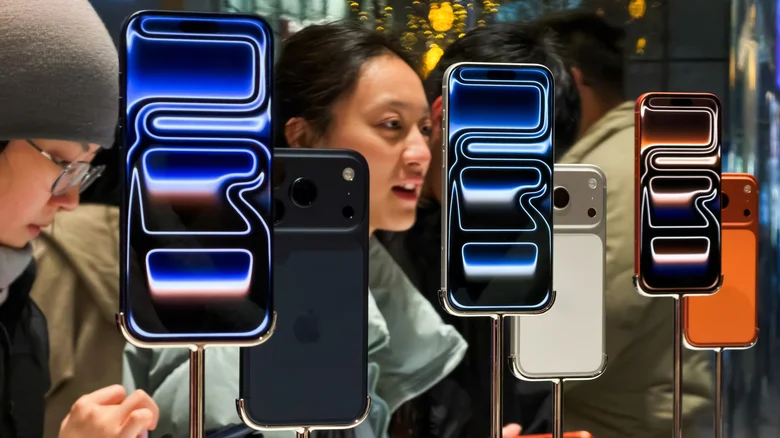
iPhone 17 Pro Max Preorders Smashing Every Previous Apple Sales Record
The hottest Apple launches do not start with a keynote; they start when delivery dates slip while shoppers are still comparing colors. That is why Pro Max preorders became a louder signal than another glossy product reveal. For U.S. buyers, the story is not only about a bigger phone. It is about timing, monthly carrier math, trade-in pressure, camera habits, and the feeling that the safest upgrade choice is still the most expensive one.
Apple opened orders for the iPhone 17 Pro and iPhone 17 Pro Max on September 12, 2025, with availability beginning September 19 across more than 63 countries and regions, including the U.S. Reports from China described record preorder activity for the broader iPhone 17 lineup, while Apple later said iPhone revenue reached a new high in its December 2025 quarter. That makes this launch worth reading with care. The demand is real. The lesson is sharper: Apple’s premium phone now sells less like a gadget and more like a household decision. For more consumer technology coverage, digital market reporting helps track why these buying moments turn into business stories.
Why Pro Max preorders Became Bigger Than a Launch-Day Rush
A launch rush is easy to misunderstand because the first wave is a messy mix of loyal upgraders, carrier deal hunters, creators, parents buying for teens, small-business owners, and early adopters who treat a phone like a work tool. A buyer in Dallas might compare the Pro Max against a discounted iPhone 16 Pro Max, while a buyer in Chicago waits for Verizon or AT&T terms. Same phone. Different motives.
A preorder spike is a supply-chain message, not a fan chant
The common mistake is treating preorder demand as pure hype. It is more practical than that. A strong preorder window tells Apple which colors, storage tiers, and regions need more stock before the holiday quarter begins. Retailers watch the same signs because a shipping delay can shift a buyer from Apple.com to Best Buy, from pickup to delivery, or from one carrier plan to another.
Reuters reported that Apple asked suppliers to boost production of the standard iPhone 17 after strong preorders, a detail that matters even when the premium models get more attention. It shows Apple was adjusting around real buyer behavior, not only around launch-day noise.
The counterintuitive part is that the Pro Max can look strongest even when the standard model steals some volume. The premium phone acts like the brand’s confidence flag. The base phone may move more units, but the top model tells shoppers what Apple thinks an iPhone should be.
Why American buyers read delay dates like market data
U.S. shoppers have learned to read Apple shipping estimates the way travelers read airline fares. A two-week delay does not always mean panic-level demand, but it feels like a warning: order now or watch your preferred storage disappear. That feeling changes behavior. It can make a $1,199 phone feel safer today than a cheaper option that arrives too late for a birthday, work trip, or holiday gift.
This is where American buying habits become specific. Many customers do not walk into an Apple Store with the full price in mind. They see a carrier credit, a trade-in estimate, and a monthly bill. That setup makes the high-end model easier to justify because the pain is spread across years.
A strange thing happens after that. Scarcity does not always push people away. Sometimes it confirms the choice. If the 256GB silver model is delayed but the 512GB version ships sooner, plenty of buyers will pay more and tell themselves they were being practical.
The Premium iPhone Buyer Changed Faster Than the Phone Market
The smartphone market looks mature from a distance, since most phones are fast enough, most cameras are good enough, and most people are not shocked by a new rectangle anymore. Yet premium iPhone buyers still move with force because the upgrade is no longer judged by one feature. It is judged by daily friction: battery anxiety, full storage, a cracked back glass, weak zoom at a school concert, or a work phone that runs hot while recording.
The $1,199 question is not only price
Apple listed the iPhone 17 Pro from $1,099, with a 2TB Pro Max option shown at $1,999 on its U.S. store page. On paper, that price is steep. In a family budget, though, the decision often becomes more personal than financial.
A parent who records every soccer game may not compare processor scores. They compare missed shots. A real estate agent may not care about the color name, but cares about video tours, battery life, and a screen large enough to review contracts between showings. A traveling nurse may choose the larger phone because charging once less during a shift feels worth paying for.
That is why Apple can keep winning premium demand without making the phone feel strange or risky. Many buyers are not asking for a wild new idea. They want the least annoying version of the device they already trust.
Trade-ins turned sticker shock into monthly math
The U.S. carrier market changes the emotional weight of Apple pricing. A buyer rarely says, “I am paying more than a thousand dollars today.” More often, the question becomes whether the monthly bill moves by ten, twenty, or thirty dollars after credits. That framing is powerful.
It also blurs the line between want and need. A person with an iPhone 13 Pro Max and a strong trade-in offer may feel that waiting costs money. The offer has an expiration date. The old device may lose value. The new phone may be delayed. Suddenly, patience feels like a risk.
This is a key reason iPhone 17 demand can remain strong even when many Americans complain about prices. People reject the price in public, then accept the payment plan in private. Apple understands that gap better than almost anyone.
The practical advice for readers is simple: compare the total cost, not only the monthly cost. A bigger credit can hide a longer contract, and an early upgrade can lock you into a plan that costs more than the phone itself. This is a good place to review an iPhone upgrade timing guide before choosing a carrier path.
What Apple’s Record Chase Reveals About the Upgrade Cycle
The iPhone upgrade cycle is no longer a clean two-year habit: some people upgrade every year because they want the best camera, while others wait four or five years because their current phone still works. Apple’s challenge is to pull both groups at once without making either feel foolish. This iPhone upgrade cycle did that by giving practical buyers more reasons to move while giving premium buyers a stronger top end.
Bigger batteries and cameras solved old upgrade friction
For spec comparison, Apple’s official iPhone 17 Pro page points to a larger 6.9-inch display on the Pro Max, up to 39 hours of video playback, 48MP rear cameras, an 18MP Center Stage front camera, A19 Pro, vapor-chamber cooling, and up to 2TB of storage. Those details are not abstract for American buyers. They map to problems people already feel.
Think about a parent filming a graduation from the back row. Zoom matters there. Think about a contractor using the phone for photos, invoices, texts, maps, and calls through a long day. Battery matters there. Think about a college student in the U.S. recording clips for class, sports, and social posts. Storage matters there.
The non-obvious insight is that Apple’s biggest upgrade triggers are not always the newest features. They are the moments when an old weakness becomes irritating enough to pay to remove. A phone can feel “fine” for three years, then one missed video or dying battery makes the upgrade feel overdue by morning.
The base iPhone success makes the premium story stranger
Counterpoint Research said the standard iPhone 17 led global smartphone sales in Q1 2026 with a 6% share, followed by iPhone 17 Pro Max and iPhone 17 Pro in the next two positions. That ranking complicates the simple story that the most expensive phone alone carried the cycle.
It also makes the premium model more interesting. If the base iPhone is strong, the top model cannot survive on Apple loyalty alone. It has to attract users who can explain the extra spend to themselves. Bigger display. Longer battery. More storage. Better zoom. Better heat control. Those reasons matter when a cheaper iPhone is no longer a weak choice.
This is why the Apple sales record conversation should not be treated as a trophy headline. It is a sign that Apple found two lanes at once. The standard model pulled practical buyers. The flagship pulled people whose phones carry work, memory, entertainment, and identity in one slab of glass and metal.
For publishers covering tech buying behavior, a related piece on smartphone shopping habits in the U.S. can build a strong internal cluster around launch demand, carrier deals, and upgrade timing.
How This Demand Changes the Next Apple Launch
A strong iPhone cycle does not end when stores open because it changes what Apple, carriers, accessory makers, and even Android rivals do next. Once Apple sees which model carries the most heat, every part of the market adjusts. Cases get produced in different colors, retail staff learn which objections to answer first, and carriers shape promotions around the model people already want.
Scarcity now moves through carriers, not only Apple Stores
Years ago, the launch story centered on Apple Store lines. Now the real battlefield is split across Apple.com, the Apple Store app, Best Buy, Costco, Verizon, AT&T, and T-Mobile. A buyer may start at Apple, check a carrier, compare trade-in terms, then choose pickup at a store miles away because it saves a week.
Apple announced the Pro models for preorder at 5 a.m. PDT on September 12, 2025, and the timing itself became part of the buying ritual for U.S. customers trying to secure launch-day delivery. The early hour rewards prepared buyers. It also punishes hesitation.
This changes how demand looks from the outside. A model may appear available at one retailer and constrained at another. One color may ship sooner. One storage tier may vanish first. That does not weaken the demand story. It shows how fragmented modern buying has become.
The real victory is confidence before the holiday quarter
Apple’s strongest result may not be the launch weekend. It may be the confidence that follows. In January 2026, Apple reported fiscal Q1 revenue of $143.8 billion, up 16% year over year, and said iPhone revenue reached a new high. That result turned launch interest into a broader business signal.
For U.S. buyers, this matters because it shapes the discount calendar. A hot flagship rarely gets generous direct discounts right away. Carriers may offer credits, but cash discounts on the top model tend to be limited when demand is strong. Waiting can still help some shoppers, yet it may not deliver the deal they expect.
The hidden lesson is that Apple does not need every buyer to choose the most expensive phone. It needs enough buyers to believe the top model sets the standard. Once that belief holds, the rest of the lineup benefits, and the next Apple sales record becomes easier to imagine before it arrives.
Conclusion
Apple’s latest iPhone cycle shows how much power still sits inside a product category many people call mature. The phone did not need to shock the market to move it. It needed to solve the small pains that build up in daily life: weak battery, crowded storage, missed zoom, slow charging, and the quiet worry that an older device may fail at the wrong time.
The smartest read is that Pro Max preorders turned Apple’s premium phone from a launch item into a wider confidence test. Buyers were not only choosing a handset. They were choosing the version of the iPhone they believed would last longest, record better, and feel safer through another long upgrade cycle. That is why the Apple sales record conversation should be handled with care, not hype.
For Americans planning an upgrade, the winning move is not chasing the first delivery date. It is matching the model, storage, carrier terms, and trade-in value to how you live. Buy the phone that lowers friction across work, travel, family, weekends, and the next three years.
Frequently Asked Questions
How strong was iPhone 17 Pro Max demand in the United States?
Demand appeared strong through launch timing, shipping pressure, carrier promotions, and later Apple revenue results. Apple did not release a separate U.S. preorder count for the model, so the safest reading is strong demand rather than a confirmed public unit total.
Is the iPhone 17 Pro Max worth buying over the iPhone 17 Pro?
It makes sense if you want the biggest screen, longest battery life, and the highest storage option. The regular Pro is better for buyers who want flagship cameras and speed in a smaller phone with a lower starting price.
Why did iPhone 17 demand stay strong despite high prices?
Carrier credits, trade-ins, and monthly payment plans softened the sticker shock. Many buyers also upgraded from older phones, so battery life, camera quality, storage, and screen gains felt more useful than they would to someone with a recent Pro model.
Did Apple officially confirm record preorder numbers?
Apple did not publish a global preorder unit count for the iPhone 17 Pro Max. Public evidence points to strong demand, record activity in some reported markets, and record iPhone revenue later, but those are not the same as an official preorder total.
What storage size should most iPhone 17 Pro Max buyers choose?
Most users are safest with 256GB or 512GB. Choose 1TB or 2TB only if you record heavy video, keep large photo libraries offline, shoot work content, or hate managing storage. Paying for unused storage rarely makes sense.
Are carrier deals better than buying directly from Apple?
Carrier deals can be better if you plan to stay with the same provider and the plan price already fits your budget. Buying from Apple can be cleaner if you want flexibility, easier trade-in comparison, or less commitment to a long service contract.
Will iPhone 17 Pro Max prices drop soon?
Large direct discounts are less likely while demand stays high. Better savings usually come through trade-ins, carrier credits, retailer gift cards, or refurbished listings later. Shoppers who need the phone now should compare total contract cost, not only upfront price.
What does the iPhone 17 launch mean for future Apple phones?
It raises expectations for battery life, storage, camera zoom, and heat control. Once buyers treat those gains as normal, future models must improve without making current owners feel left behind too soon.